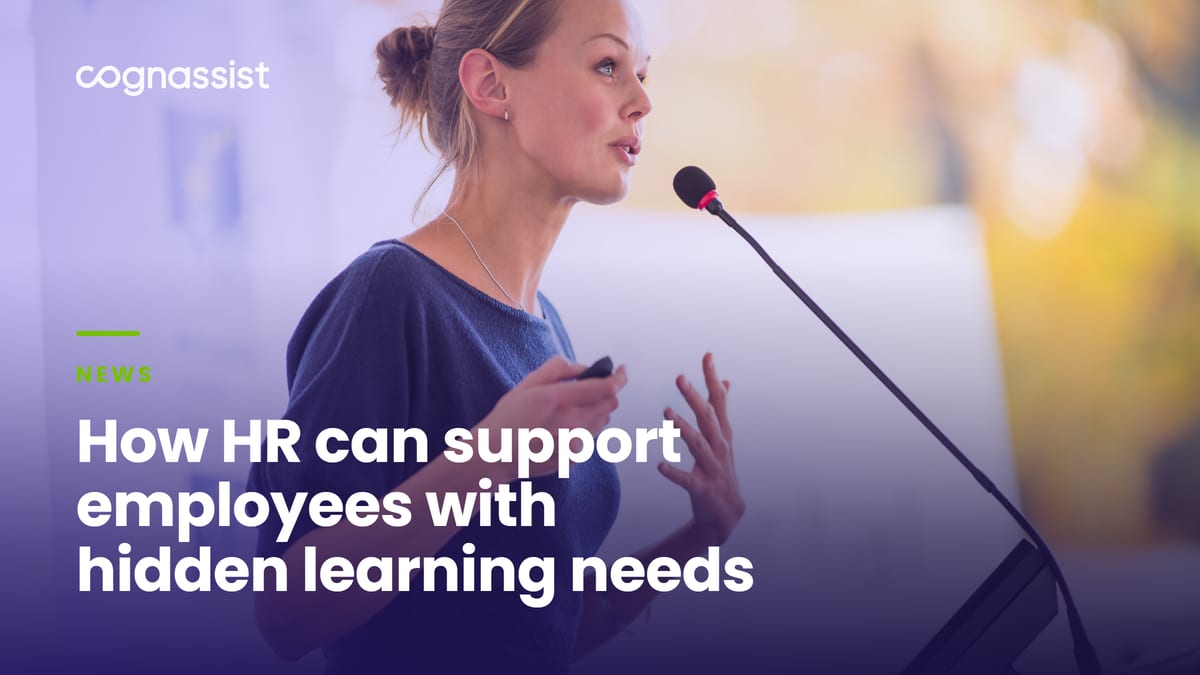
With 1 in 3 individuals estimated to be neurodiverse, many employees have hidden learning needs that require tailored support.
HR professionals play a crucial role in fostering inclusivity and helping employees reach their potential by addressing specific challenges in cognitive domains like verbal memory, executive function, and literacy.
Supporting employees starts with understanding their unique strengths and challenges. Actions such as breaking down tasks into smaller chunks, providing visual aids, and using consistent layouts in presentations can help those with verbal or non-verbal memory difficulties. For individuals with executive function challenges, encouraging to-do lists, minimising distractions, and flexible work arrangements are effective strategies.
HR can also support literacy and numeracy needs by offering glossaries, simplifying communications, and using visual aids like graphs for abstract concepts. Open communication is key; normalising discussions about cognitive needs creates a supportive culture. Tools like cognitive assessments during onboarding provide insight into individual strengths and help design personalised strategies.
By implementing reasonable adjustments and celebrating diverse thinking, organisations not only empower employees with hidden learning needs but also enhance workplace innovation, engagement, and productivity.