
The Cognassist support plan
The support plan any tutor can draft, then build with the learner
The Plan stage of the APDR cycle (assess, plan, do and review). Learning support plan software that turns a learner's assessment into a personalised plan in minutes, and a starting point you build with the learner.
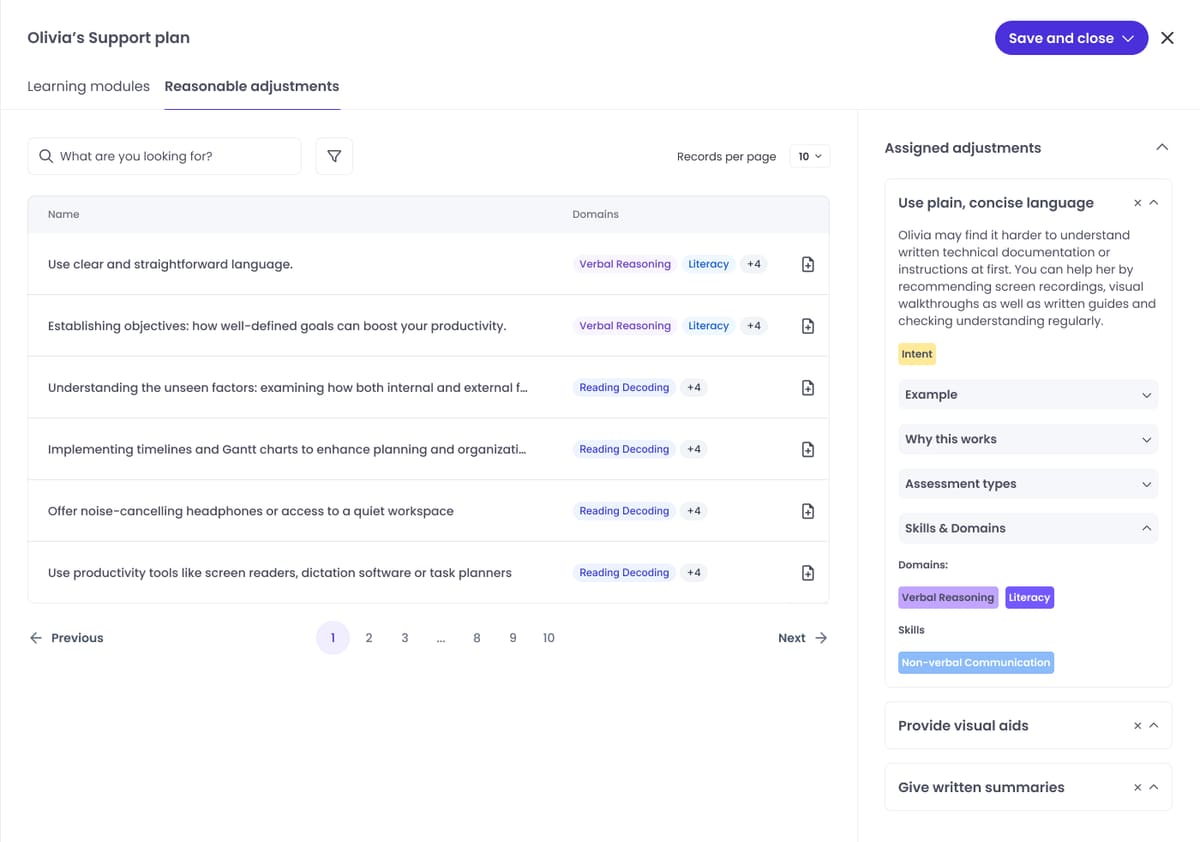
Learning support plan software any tutor can use, no specialist needed
A confident tutor drafts a good, personalised support plan (Plan360) in minutes. No specialist qualification is required to produce the plan and its adjustments: the platform does the heavy lifting. The draft is a starting point to discuss with the learner, never an imposed or finished plan.
- Drafted in minutes, so a good plan is ready before the meeting, not weeks after it.
- No specialist qualification needed to produce the plan and its adjustments; professional judgement still guides how you personalise and deliver it.
- A starting point, not a finished document: everything is editable, and the plan is agreed with the learner, never done to them.
Built from the assessed need, not a blank page
Support planning usually starts from a blank page, tutor memory, or a generic template. Cognassist starts from the assessment: the strongest matched reasonable adjustments are added to the draft automatically, ranked from the learner's cognitive profile, so support is grounded in the assessed need, not guesswork. The tutor reviews each one, then adds or removes to fit the learner.
- Every adjustment is course-relevant: personalised to the learner's programme and subject area, not generic advice.
- Each one explains the why, the how, and the difference it should make, in plain terms.
- This is the second link of the golden thread from Assess: what the assessment surfaced becomes the plan.
A support plan you agree together, never done to the learner
The plan sets out three things: the learner's needs, the reasonable adjustments matched to them, and the support to be delivered. You walk it through with the learner in the needs assessment meeting, strengths first, and agree it together. The learner can shape it, and can choose to decline: it is offered, not imposed.
- Agreed in the needs assessment meeting, then shared with the learner, so the plan is owned rather than filed away.
- The agreed adjustments carry into Do and review: delivered in everyday teaching and recorded, so support becomes evidence as a by-product.
- It is built from an assessment that signals where to look, for a tutor's professional judgement. It is not a diagnosis, and the adjustments are good inclusive practice.
Where it sits: the Plan stage of the APDR cycle
The support plan is the second stage of the graduated approach. It is built from what the cognitive assessment surfaced in Assess, and the support it sets out carries into Do and review. This is the golden thread: every stage traces back to an assessed need. You are looking at Plan.
Step 01 of 04
Assess
Every learner completes the cognitive assessment at onboarding, surfacing strengths and needs across the whole cohort.
- A cognitive diversity report on every learner
Step 02 of 04
Plan
Suggested adjustments become a personalised support plan, drafted by a non-specialist in minutes and co-created with the learner.
- Built from the assessed need, agreed together
You are here
Step 03 of 04
Do
Tutors deliver the agreed adjustments in the flow of teaching, and record support as they go.
- Support becomes evidence as a by-product
Step 04 of 04
Review
Progress is reviewed and the plan adjusts by re-walking it with the learner, so support stays responsive over time.
- The evidence trail stays current
Customer story · Brighter Horizons
A consistent, defensible plan for every learner
Brighter Horizons, an independent training provider, gives every learner a tailored support plan and reviews it with them month by month. Adjustments are matched to each learner, the plan is easy for the whole team to pick up and act on, and their support records held up under scrutiny: every funding claim was compliant.
“I can simply attach the learning support plan and Cognassist assessment, and everything is clear and ready to go.”
- Every learnergets a tailored, consistent support plan
- 100%compliant funding claims
- 5/5learner rating of overall support
It happens at induction for us… it starts the conversation about what would help, what do you think the barriers are, Cognassist is suggesting this, do you agree with that? Do you think this would help?
Aligned to the proposed SEND (special educational needs and disabilities) Individual Support Plan
The proposed SEND reforms point to an Individual Support Plan (ISP): a per-learner record of a learner's needs, the day-to-day support they receive, and how it is given. The Cognassist support plan already works this way, so you can get ready for the reform direction with what is live today. It aligns to the ISP concept. It does not make you compliant, and the ISP duty is not yet law.
Explore the platform
Keep exploring
See where the plan's evidence comes from, get ready for SEND reform, or step back to the whole platform.
The cognitive assessment
The Assess stage, where the plan's evidence comes from.
ExploreSEND reform readiness
How the support plan helps you get ready for the proposed ISP duty.
ExploreCustomer stories
How providers use Cognassist to support learners at scale.
ExploreThe platform
How assess, plan, do and review work together as one inclusion workflow.
Explore
FAQ
Questions buyers and practitioners ask
What is a learning support plan in Cognassist?
It is the Plan stage of the APDR cycle: a personalised learning support plan built from a learner's cognitive assessment. Any tutor can draft one in minutes, and it is co-created with the learner rather than imposed. That is what learning support plan software does here: it turns the assessed need into a plan you can act on.Do I need to be a specialist to write one?
No. A non-specialist drafts the plan and its adjustments, because the platform does the heavy lifting and matches the adjustments from the assessment. Professional judgement still guides how you personalise and deliver the plan, but no specialist qualification is required to produce it.How long does it take to draft?
A tutor drafts the plan in minutes, before the meeting with the learner. That is the plan on its own. It is separate from the cognitive assessment the learner completes, which takes about 30 minutes.How do you write a learner support plan?
Start from the assessment. The strongest matched reasonable adjustments are added to the draft automatically, personalised to the learner's course. The tutor reviews, adds or removes, then walks the plan through with the learner in the needs assessment meeting and they agree it together. Support starts from evidence, not a blank page.Is the plan imposed on the learner?
No. The draft is a starting point to discuss, never a finished document. The learner shapes it with you and can legitimately decline: it is offered, not imposed. Co-creation is the expected, Ofsted and SEND-aligned way to plan support.Where do the adjustments come from?
From the learner's cognitive assessment. Adjustments are matched and ranked from their cognitive profile, then personalised to their programme and subject. Each one explains the why, the how, and the difference it should make.We already have a support-plan or individual learning plan field in our management information system (MIS) or e-portfolio. What does Cognassist add?
Your MIS or e-portfolio stores the plan you write into it. Cognassist drafts the plan itself: from the assessed need, in minutes, by a non-specialist, as a co-created starting point. That is the content those systems depend on, and it fits alongside them rather than replacing them.Is this a SEND Individual Support Plan (ISP)?
It aligns to the proposed SEND (special educational needs and disabilities) Individual Support Plan concept and helps you get ready for it. The ISP duty is reform direction, not yet law, and using the plan does not make you compliant. For what is live versus proposed, see our SEND reform readiness guide.Is the assessment behind it a diagnosis?
No. The assessment measures the cognitive differences associated with specific learning differences to inform a tutor's judgement. It is a signal, not a diagnosis, and it does not by itself establish disability under the Equality Act 2010. The adjustments are good inclusive practice, not legal determinations.
See the support plan at work
Book a demo and we will show you how a plan is drafted from the assessment, co-created with the learner, and carried into everyday support.